Why Æthelflæd for our
Great Dane Kennel Name?
Æthelflæd is more than just a kennel name; it is a
reflection of British heritage, values, and purpose.
The name honours Æthelflæd, Lady of the Mercians—the warrior-ruler who defended West Mercia against Viking invasion in the early 10th century. Æthelflæd was a female leader of rare strength and intelligence, commanding armies, fortifying towns, and protecting her people at a time when female authority was almost unheard of. Her courage and resolve helped shape the future of England.
Our Director, Ionie-Lee Smallwood, was born in West Mercia, and is deeply passionate about promoting strength and unity in women which extends to preserving the stories of powerful historical female figures whose achievements have too often been overlooked throughout history. Choosing Æthelflæd as the kennel name is a
deliberate tribute to her legacy, honouring a woman who embodied resilience, leadership, and guardianship.
There is also a note of intentional wordplay. Æthelflæd famously defended Mercia against the Danes, and Aethelflaed now stands proudly as the name behind a breeding programme dedicated to Great Danes. It is a
respectful yet light-hearted connection between history and the dogs themselves.
At its heart, Æthelflæd represents strength, protection, loyalty, and quiet authority; qualities reflected both in the incredible woman who inspired the name and in the Great Danes bred under this Kennel Name.
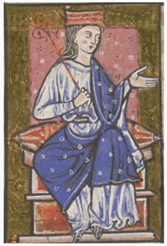
Left:Æthelflæd as depicted in the cartulary of Abingdon Abbey. © Art Collection 4 / Alamy Stock Photo.
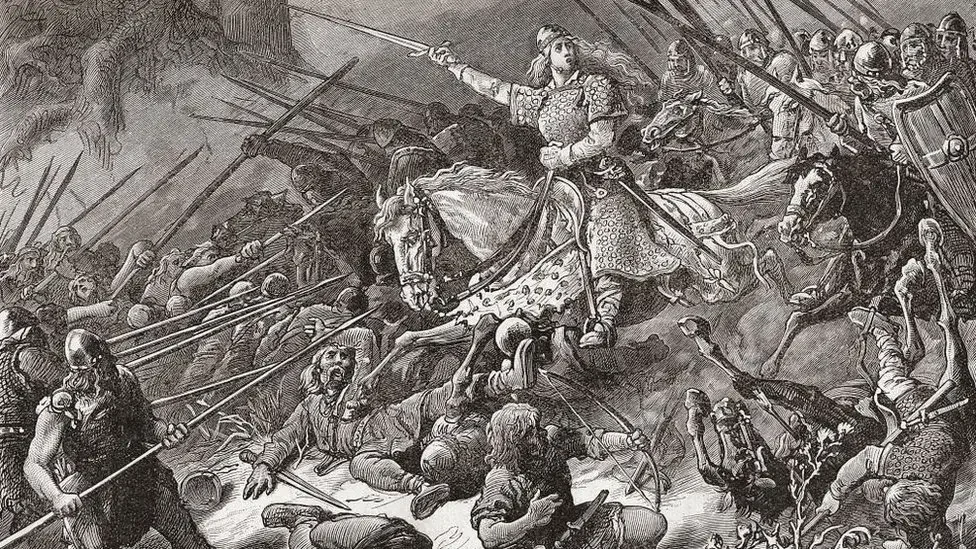
Below: Æthelflædas depicted in battle Source:Getty images
Æthelflæd - Who was she?
The warrior queen who broke the glass ceiling
Æthelflæd, Lady of the Mercians (d. 918), was a warrior-ruler and the often forgotten saviour of West Mercia at a moment when Viking power threatened to erase Anglo-Saxon rule entirely. Ruling in her own right after 911, she did not govern from behind the scenes: she personally led military campaigns, commanded fortified towns, and coordinated armies likely numbering several thousand men, drawn from the Mercian fyrd and the burh garrisons she strategically established across the region. At a time when women almost never held battlefield authority, Æthelflæd directed sieges, reclaimed Viking-held strongholds such as Derby and Leicester, and secured Mercia’s borders through both warfare and diplomacy. Her leadership restored stability, revived Mercian power, and broke the back of the Danelaw in the Midlands. Though later overshadowed by her father Alfred the Great and her brother Edward the Elder, Æthelflæd was indispensable to their success: without her victories, West Mercia would likely have fallen, and the unification of England may never have been possible. She stands as one of early medieval Europe’s most extraordinary military leaders—respected in her lifetime, but long overlooked by history.
History of Æthelflæd, Lady of the Mercians
(c. 870 – 12 June 918, Died at 48 years old)
In an age remembered for kings, conquest, and collapse, Æthelflæd stands apart. She was one of the most formidable rulers of early medieval Britain and is widely regarded as the most powerful woman in Anglo-Saxon England. Known to her contemporaries as Myrcna hlæfdige-“Lady of the Mercians”-she ruled Mercia from 911 until her death in 918, guiding the kingdom through its darkest years and playing a decisive role in breaking Viking dominance and laying the foundations of a unified England (Anglo-Saxon Chronicle, MS C, annals 910–918; Ann Williams).
A Kingdom on the Brink
Æthelflæd came of age during the Viking Age, a time of profound instability. For decades, Scandinavian armies had raided, settled, and conquered large swathes of England. By the late ninth century, much of the east and north lay within the Danelaw, ruled by Norse kings and jarls rather than Anglo-Saxon lords (Anglo-Saxon Chronicle).
Mercia, once the most powerful kingdom in England, had been battered by invasion and internal fracture. Its former dominance was a memory, its survival uncertain. It was into this fragile landscape that Æthelflæd stepped-not merely as a ruler by circumstance, but as a strategist, commander, and restorer of Mercian power (Stafford; Keynes).
Daughter of Alfred, Heir to Mercia
Born around 870, Æthelflæd was the eldest daughter of Alfred the Great, king of Wessex, and Ealhswith, a Mercian noblewoman. This lineage placed her at the crossroads of two great Anglo-Saxon dynasties, uniquely positioning her to bridge their political interests (Asser, Life of King Alfred).
Alfred was renowned not only as a warrior but as a reformer obsessed with learning, law, and governance. Within his court, Æthelflæd would have received an education exceptional for any woman-and indeed many men-of her time. She was likely literate in Old English, familiar with Christian theology and law, and exposed early to the mechanics of rule, diplomacy, and war (Asser; Stafford). Her upbringing did not prepare her for ceremonial queenship, but for command.
Marriage and the Making of a Ruler
Around 886, Æthelflæd married Æthelred, Lord of the Mercians. Their union was political as much as personal, binding Mercia and Wessex together against the Viking threat. Mercia retained its identity, but acknowledged Alfred’s overlordship, creating a fragile yet vital alliance (Anglo-Saxon Chronicle).
As Æthelred’s health declined in the early tenth century, Æthelflæd increasingly governed in practice. Charters and contemporary references show her acting alongside-and sometimes independently of-her husband, exercising real authority long before she formally succeeded him (S 221; Ann Williams). Together they had one child, Ælfwynn, whose fate would later shape Mercia’s future.
Lady of the Mercians
When Æthelred died in 911, Æthelflæd assumed power in her own right. She was not styled queen, but Lady of the Mercians-a title that carried unmistakable authority. Contemporary sources record no challenge to her rule; Mercian nobles, clergy, and warriors accepted her leadership without hesitation (Mercian Register, ASC MS C).
In a Europe where female sovereignty was vanishingly rare, Æthelflæd ruled openly, decisively, and effectively.
The Warrior Who Reclaimed Mercia
Æthelflæd was no distant ruler issuing commands from behind walls.
She was a hands-on military leader, directing campaigns against
Viking strongholds across central England. Building on the
defensive system pioneered by her father, she expanded and
reinforced a network of burhs-fortified towns that served as military
bases, administrative centres, and engines of economic recovery
(Keynes; Lavelle).Burhs at Tamworth, Stafford, Warwick, Bridgnorth,
Runcorn, and Chester transformed the Mercian landscape. They
hemmed in Viking movement, protected trade routes, and allowed
rapid mobilisation of troops (Anglo-Saxon Chronicle).
Between 912 and 917, Æthelflæd’s armies-likely numbering several
thousand men, drawn from burh garrisons and the Mercian fyrd
-pushed steadily into Viking-held territory (Lavelle). Derby, one of
the Five Boroughs of the Danelaw, fell after a hard-fought siege in
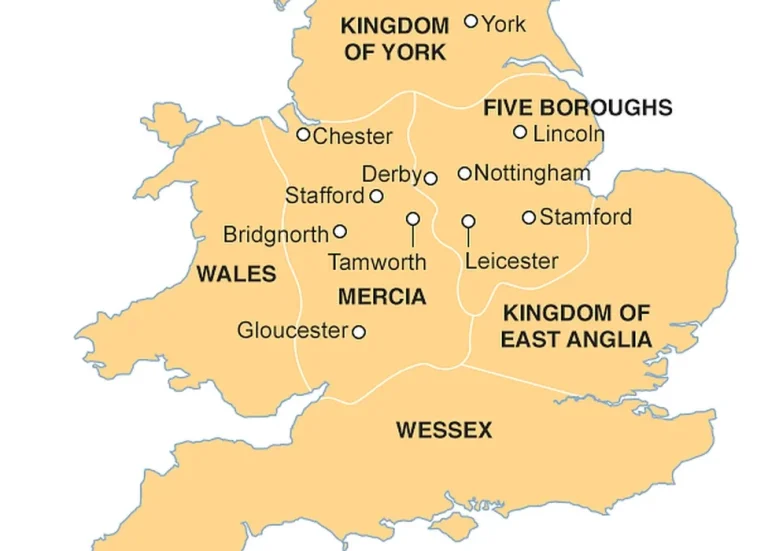
which several of her thegns were killed, a testament to both the cost Above: The British Isles had been split by waves of invasion into rival kingdoms.
of victory and her personal commitment to the campaign Source: BBC News/Uk-england-44069889
(ASC, annal 917). Leicester submitted without battle, suggesting not
only military pressure but formidable diplomatic authority. By 918, even the rulers of York reportedly sought her protection-an extraordinary acknowledgment of her power from the heart of Viking Northumbria (Anglo-Saxon Chronicle).
Diplomat as Well as Warrior
Æthelflæd’s strength lay not only in war, but in balance. She cultivated alliances with Welsh kingdoms such as Powys and Gwynedd, using diplomacy to stabilise Mercia’s western borders. When agreements were broken, she responded decisively, leading punitive expeditions that reinforced her authority (ASC; Williams). This combination of force and negotiation allowed Mercia not merely to survive, but to expand.
Faith, Memory, and Power
A devout Christian, Æthelflæd understood the political power of faith and memory. At Gloucester, she re-founded St Oswald’s Priory and translated the relics of St Oswald of Northumbria, transforming the city into a major spiritual and political centre (charters; William of Malmesbury). In life and in death, she bound Mercian identity to sacred history. She was buried at St Oswald’s Priory beside her husband, her resting place a final statement of legitimacy and continuity.
Death and the End of Mercia
Æthelflæd died on 12 June 918 at 48 years old, likely at Tamworth (Anglo-Saxon Chronicle). Her daughter Ælfwynn briefly succeeded her, but within months Edward the Elder, king of Wessex and Æthelflæd’s brother, removed her from power. Mercia was absorbed into the emerging Kingdom of England.
Mercian independence ended-but only because Æthelflæd had made unification possible.
Legacy
Æthelflæd’s legacy is extraordinary. She was one of the very few documented female rulers of early medieval Britain, a successful military commander, and the architect of Mercia’s final resurgence. Long overshadowed by her father and brother, she was nonetheless indispensable to their success. Without her leadership, West Mercia may not have survived-and England may never have been born.
Today, she is increasingly recognised through scholarship, statues, and commemorations in Tamworth, Gloucester, and Stafford, standing at last where she belongs: not as a footnote, but as a central figure in the story of England.
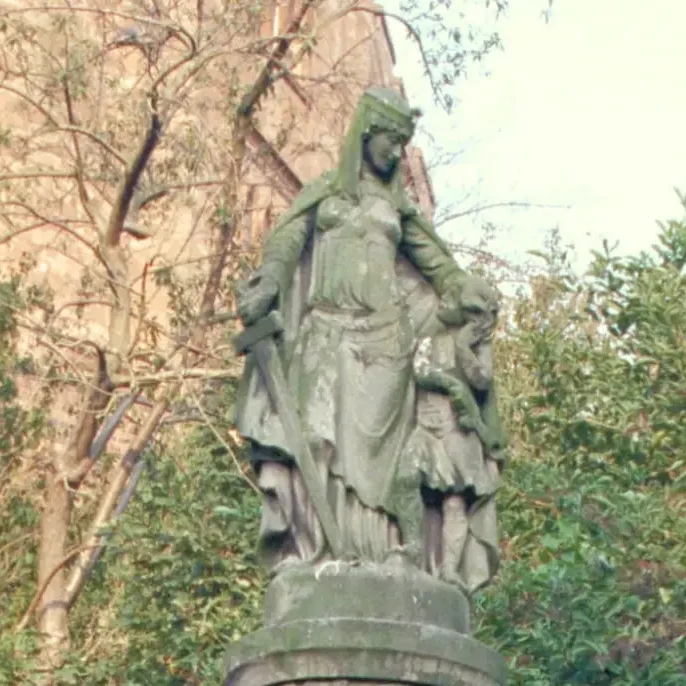
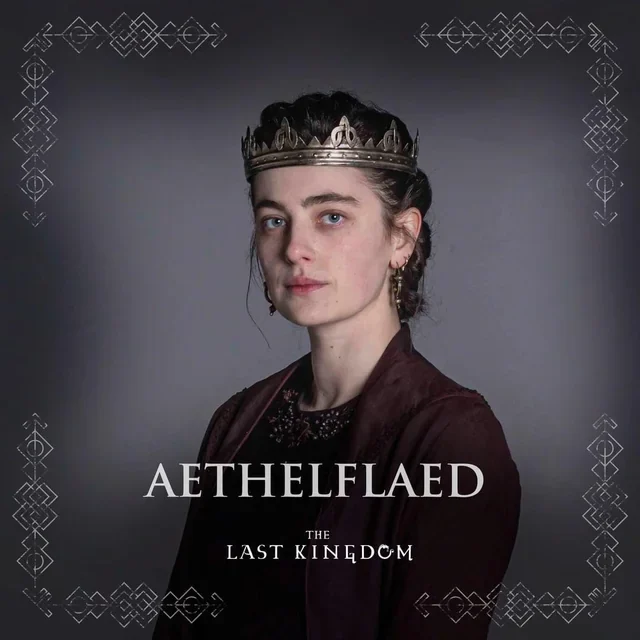
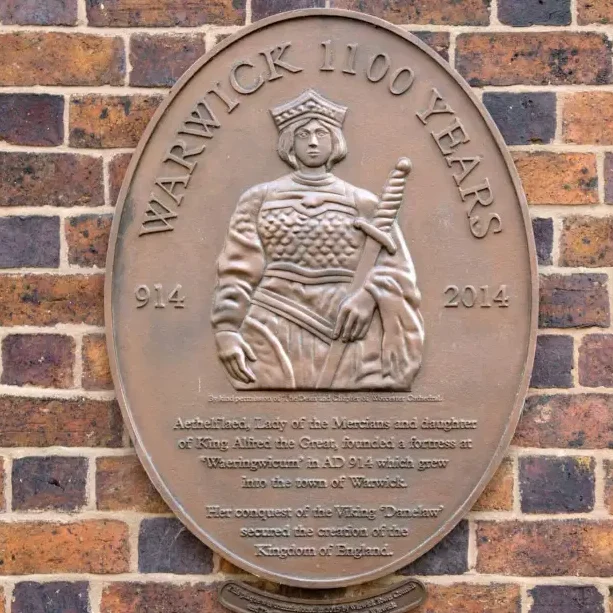
Left: Detail of a statue of Aethelflaed at Tamworth, Staffordshire. © Ms Kaz Diller. Source: Historic England Archive IOE01/00958/34.
Centre: A plaque commemorating the founding of Warwick by Aetheflaed in AD 914. © Kevin George / Alamy Stock Photo.
Right: Aethelflaed played by Millie Brady in the BBC series The Last Kingdom Source: https://www.bbc.co.uk/programmes/profiles/4L949Rcb1SgFCJ9n4bgcD8y/aethelflaed